
The Empty Chair
The first thing people noticed was not that Mr. Rao was missing. It was that his chair was empty. Every evening, at five o'clock, Mr. Rao came to the community park and occupied…
The first thing people noticed was not that Mr. Rao was missing.
It was that his chair was empty.
Every evening, at five o'clock, Mr. Rao came to the community park and occupied the old wooden chair beneath the neem tree, overlooking the large children's play area.
The play area was the heart of the community.
From late afternoon onwards, it came alive. Children raced across the lawns, swung from the monkey bars, argued over turns on the swings and played cricket with a seriousness usually reserved for international matches. Parents gathered around the edges, watching, chatting and occasionally shouting instructions that the children had no intention of following.
Mr. Rao seemed to enjoy all of it.
He had chosen a chair beneath the neem tree, just beyond the boundary of the cricket area. It had one armrest slightly lower than the other and a patch of paint missing from its back. It was not particularly comfortable, nor was it in the best part of the park.
But it was his chair.
Nobody had ever said so. Nobody had written his name on it.
Yet, over the years, an unwritten rule had quietly developed: the chair belonged to Mr. Rao.
If a child climbed onto it, his mother would say, “Come down, beta. Uncle will be coming.”
If a visitor sat there, someone would gently explain, “He sits there every evening.”
And the visitor would get up.
Mr. Rao himself never objected when someone occupied it accidentally. He would simply stand nearby, smiling, until they noticed him.
He was an unremarkable man in an increasingly hurried world.
He wore neatly pressed white shirts, grey trousers and old sandals. He carried a newspaper under his arm, though he rarely seemed to read it. He would sit, fold the newspaper on his lap, and watch the life of the park unfold before him.
He knew the children by name.
He knew which boy always claimed to have scored six when the ball had barely crossed the boundary. He knew which little girl refused to come down from the swing when her mother called. He knew which parents arrived with coffee and which arrived with complaints. And the children knew him.
“Rao Uncle, six!”- “Rao Uncle, catch!”- “Rao Uncle, he is cheating!”
Mr. Rao had become the unofficial umpire, commentator and occasional victim of the children's cricket matches.
When a ball rolled towards him, he would stop it with his sandal and hold it up.
“Come and take it.”- “Throw it, Uncle!”- “Why? You think I am your ball boy?”
The children would laugh. That was how most people knew him. As a familiar face.
A nod. A smile. A “Good evening.” Nothing more.
Perhaps that is how neighbours become strangers without ever intending to.
We know when they leave for work, when their newspapers arrive and which car belongs to which flat. We recognize their voices in the lift. We complain about their children making noise.
And yet we may not know their stories.
No one knew much about Mr. Rao. Some thought he was a retired government officer. Others believed he had been a schoolteacher. Someone once said he had a son living abroad. Someone else said he had two daughters.
All of it was speculation. Mr. Rao never corrected anyone. He simply came to the park at five.
Until one Monday, he didn't.
At five, the chair was empty. Nobody noticed immediately. There were too many other things happening. Children were shouting over a cricket match. A little boy had fallen near the slide and was loudly announcing his injury to anyone willing to listen. Parents were calling their children home.
By six, however, the chair was still empty. “Perhaps he isn't well,” someone said.
On Tuesday, the chair remained empty.
On Wednesday, Aarav, an eight-year-old who played cricket in the park every evening, asked, “Where is Rao Uncle?” Nobody knew.
On Thursday, the security guard looked towards the chair several times.
“He has never missed so many days,” he said. “Has he ever missed a day?” Mrs. Mehta asked. The guard thought about it. “I don't remember one.”
There was a pause. Then someone asked the obvious question.
“Where does he live?” Silence. It was an uncomfortable silence.
They knew his chair. They knew his tea. They knew his routine. They knew that he preferred the shade of the neem tree and that he never complained when a cricket ball landed beside him.
But nobody knew his address.
The next morning, Mrs. Mehta began asking around.
After several enquiries, two wrong addresses and one very confident but completely incorrect direction from a shopkeeper, she finally found his flat.
An elderly woman opened the door. “Yes?”
“We are neighbours,” Mrs. Mehta said. “We are looking for Mr. Rao.”
The woman's expression changed. “You know him?”
Mrs. Mehta hesitated. “We see him every day.”
The woman smiled gently. “He is in the hospital. He fell at home.”
Mrs. Mehta's heart sank. “Is he all right?”
“Yes. Nothing serious, fortunately. He should be back in a few days.”
There was a moment of relief.
Then the woman said something that stayed with Mrs. Mehta.
“He will be surprised that anyone noticed.”
That evening, the news spread through the park. And something curious happened. People began remembering Mr. Rao.
The gardener remembered that Mr. Rao brought him tea on particularly hot afternoons. The security guard remembered that when his daughter needed money for school, Mr. Rao had quietly helped him. The newspaper boy remembered being told, years ago, that he should continue his studies instead of giving up school to work. Mrs. Mehta remembered that Mr. Rao never allowed her to carry the heavier grocery bags when they happened to meet near the gate.
And Aarav said simply, “He listens to me.” Nobody laughed.
Because they understood what Aarav meant. The old man had been listening to all of them. Perhaps that was his gift. He had made people feel that, for a few minutes, whatever they were saying mattered.
A week later, a taxi stopped outside the community gate.
Mr. Rao got out slowly.
The security guard hurried towards him. “Careful, sir!”
Mr. Rao straightened himself. “I have been told to walk slowly,” he said. “I have not been told to stop walking.” The guard laughed.
Aarav came running from the play area. “Rao Uncle! You missed my cricket match!”
“Did you win?” “No.” “Then perhaps I didn't miss much.”
Aarav frowned. The adults laughed. Mr. Rao smiled. He walked towards the neem tree. Towards the chair.
But before he could sit down, Mrs. Mehta placed a small cushion on it.
The security guard brought his tea. The gardener came over to ask about his health.
Three children gathered around him. For several minutes, everyone spoke at once.
Mr. Rao looked bewildered. “You people are making too much fuss over an old man.”
Mrs. Mehta smiled. “You should have told us where you lived.”
Mr. Rao looked at her. “I didn't think anybody needed to know.”
“Perhaps we did,” she replied.
He looked around. At the children running across the play area. At the gardener.
At the security guard. At the parents watching from the benches. At the people who had been familiar faces for years and had, without anyone noticing, become something more.
Then he sat down.
For the first time, nobody hurried away.
The newspaper remained unopened on his lap. The tea grew cold. And Mr. Rao stayed until the park lights came on.
After that evening, things changed—not dramatically, and not all at once.
People simply began noticing one another. Mrs. Mehta learned the security guard's daughter's name. The security guard learned that the gardener had grandchildren in another city. Aarav began greeting the elderly gentleman who walked alone every morning. Parents began learning the names of children who were not their own. The residents started stopping for a few minutes instead of rushing through the gate with their eyes fixed on their phones.
Nothing had been organized. No committee had passed a resolution. No notice had been put up.
It had simply become harder to remain strangers after discovering how easily a familiar face could disappear.
Years later, the old chair finally broke. The society replaced it with a new one. Someone suggested putting Mr. Rao's name on it. He refused.
“Why?” they asked. He smiled. “Then nobody else will sit on it.”
So, there was no nameplate.
The chair remained an ordinary chair beneath an ordinary neem tree, overlooking the children's play area. But sometimes, in the evening, when someone new to the community sat there alone, an older resident would walk over and say,
“Good evening. I'm from Block B. We haven't met.” And a conversation would begin.
Because the empty chair had taught them something they had somehow forgotten. That a community is not built merely from buildings, roads, gardens and play areas. It is built from the people who notice when someone is missing. And perhaps that is why, even years after Mr. Rao stopped coming to the park, nobody in the community ever again walked past an empty chair without wondering who might be missing from it.
About writer
ZAFFERULLAH KHAN -A civil engineer and arbitration professional, is an occasional visitor to the community often accompanied by his granddaughter. The large play area and everyday life around it has given him an opportunity to observe the small interaction and familiar faces that quietly create a sense of community.
The empty Chair grew from one such observation
Hyderabad, October 2026.
Keep discovering
More from Hyderabad.
Ammamma and the Cupboard of Doom
A true story that happens in almost every house In our house there is a cupboard. Nobody calls it by any name. They just say, “It is in that cupboard.” Inside that cupboard there…
పరుగు
(మినీ కథ) ఆయన ఓ ప్రభుత్వ ఉద్యోగి. ఆవిడ చదువుకున్న గృహిణి. ఇద్దరూ ఎవరి విధి నిర్వహణల్లో వారు రోజూ పెడుతున్నారు పరుగు. ఇద్దరు మగ పిల్లల తరువాత ఆడపిల్ల కోసం ఎన్నో గుళ్ళకు పరుగు…
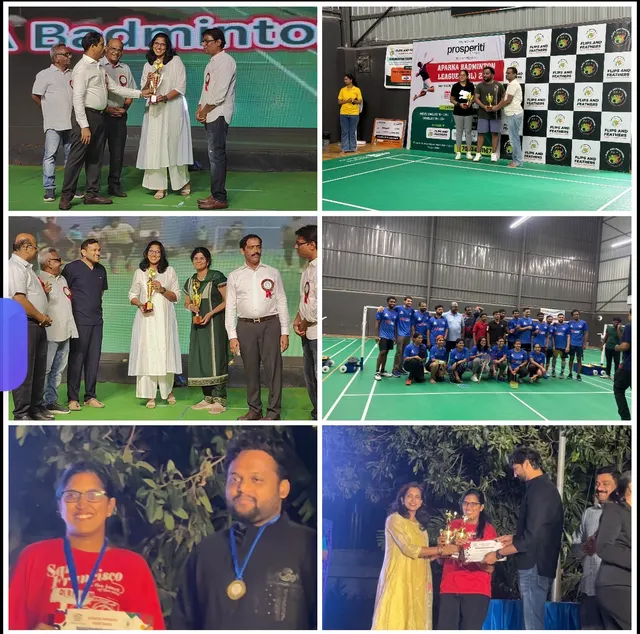
Badminton Tournament Achievements
Demonstrating a sustained commitment to sporting excellence and competitive badminton, I have achieved notable recognition across multiple tournaments. At the Tellapur…